
From Cairo With Love: The Dinner That Inspired 100 Dinners
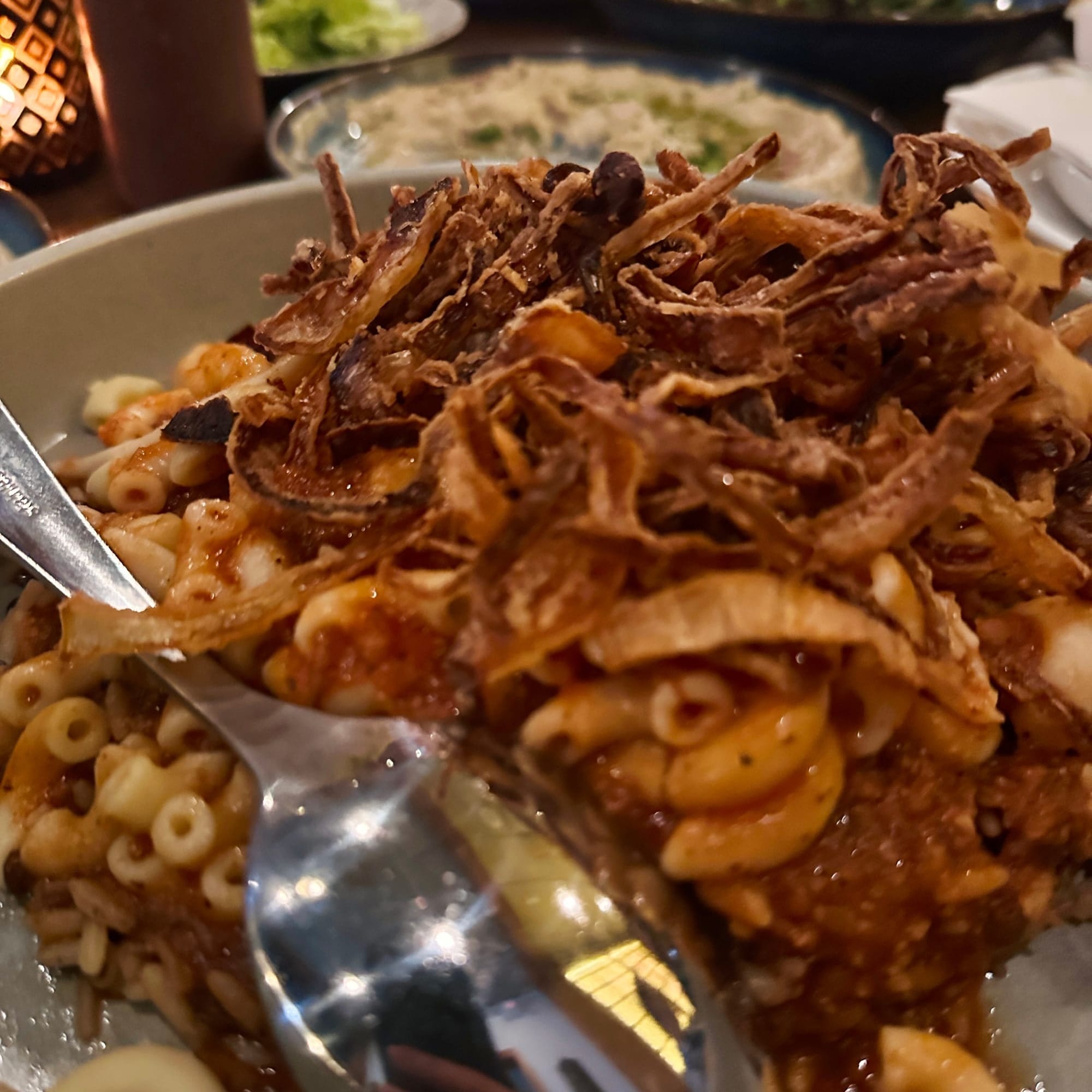
It all started with mouthfuls of koshary. This is a dish that, on the surface, shouldn't work. Rice, lentils, macaroni, vermicelli noodle strips, and chickpeas — on their own, all perfectly fine and filling bases for a dish. But together in the same bowl? Are you sure?
It all started with mouthfuls of koshary.
This is a dish that, on the surface, shouldn't work. Rice, lentils, macaroni, vermicelli noodle strips, and chickpeas — on their own, all perfectly fine and filling bases for a dish. But together in the same bowl? Are you sure?
Then comes the zesty tomato sauce and crispy fried onions, and things start to make sense. But we're not quite done yet, there's still one more finishing flourish. The da'ah — a garlicky, vinegary sauce that's delicately dashed on top. It's the seemingly optional accessory that, in fact, is an essential component tying the entire dish together.
What shouldn't work somehow magically does, in the most delightful way. So much so that koshary is the national dish of Egypt and, as of 2025, a UNESCO-recognized dish of Intangible Cultural Heritage. That's serious stuff.
The Arrival of Egyptian Food in Chicago
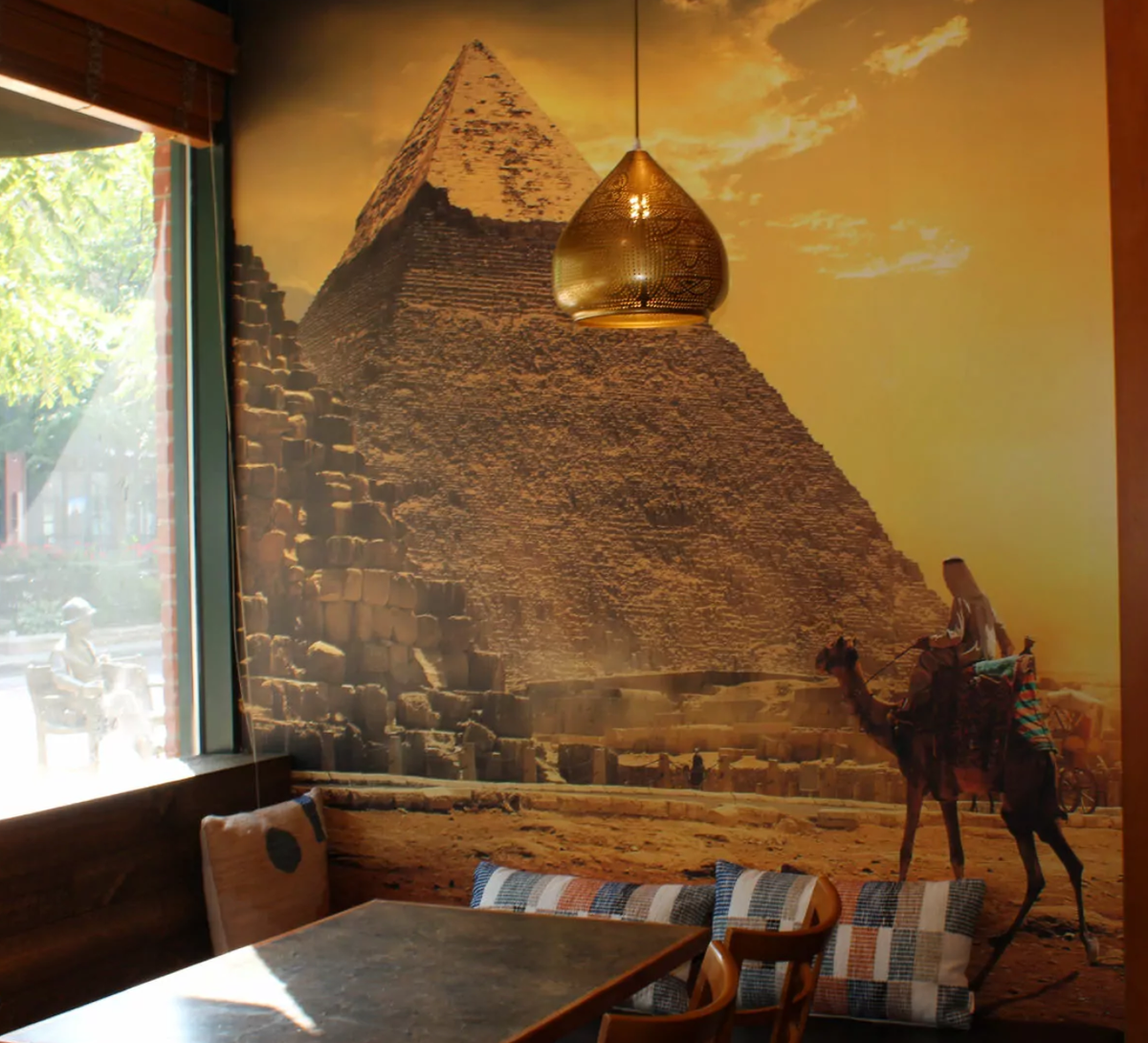
The 100 Dinners story started at Cairo Kebab, helmed by Mohammed (Mo) and Ali Saleh. Their journey to becoming restaurateurs is quite a touching one.
In the early 1990s, Mo and Ali’s uncle moved from Cairo to Chicago for love. Missing the flavors of home, he soon set his sights on opening a restaurant — and coaxed his brother over from Egypt to run it with him. "King Tut Oasis," as the original restaurant was known, operated two locations for over a decade until the responsibilities of the brothers’ growing families (including Baby Mo and Ali) led them to sell up shop.
Later, in 2016, Mo and Ali’s uncle sadly passed away. To honor his legacy and reintroduce the dishes he had brought to Chicago all those years ago, the Saleh family felt inspired to open a restaurant once again. Soon, Cairo Kebab was born, and remains today the city’s only destination for authentic Egyptian food — run by Mo and Ali as a brother duo, just as their father and uncle had done before them.
The Dinner That Kept Growing
On October 20th, 2026, a group of 40+ people gathered at the Saleh brothers' restaurant to celebrate Egyptian culture and friendship. And to try koshary.
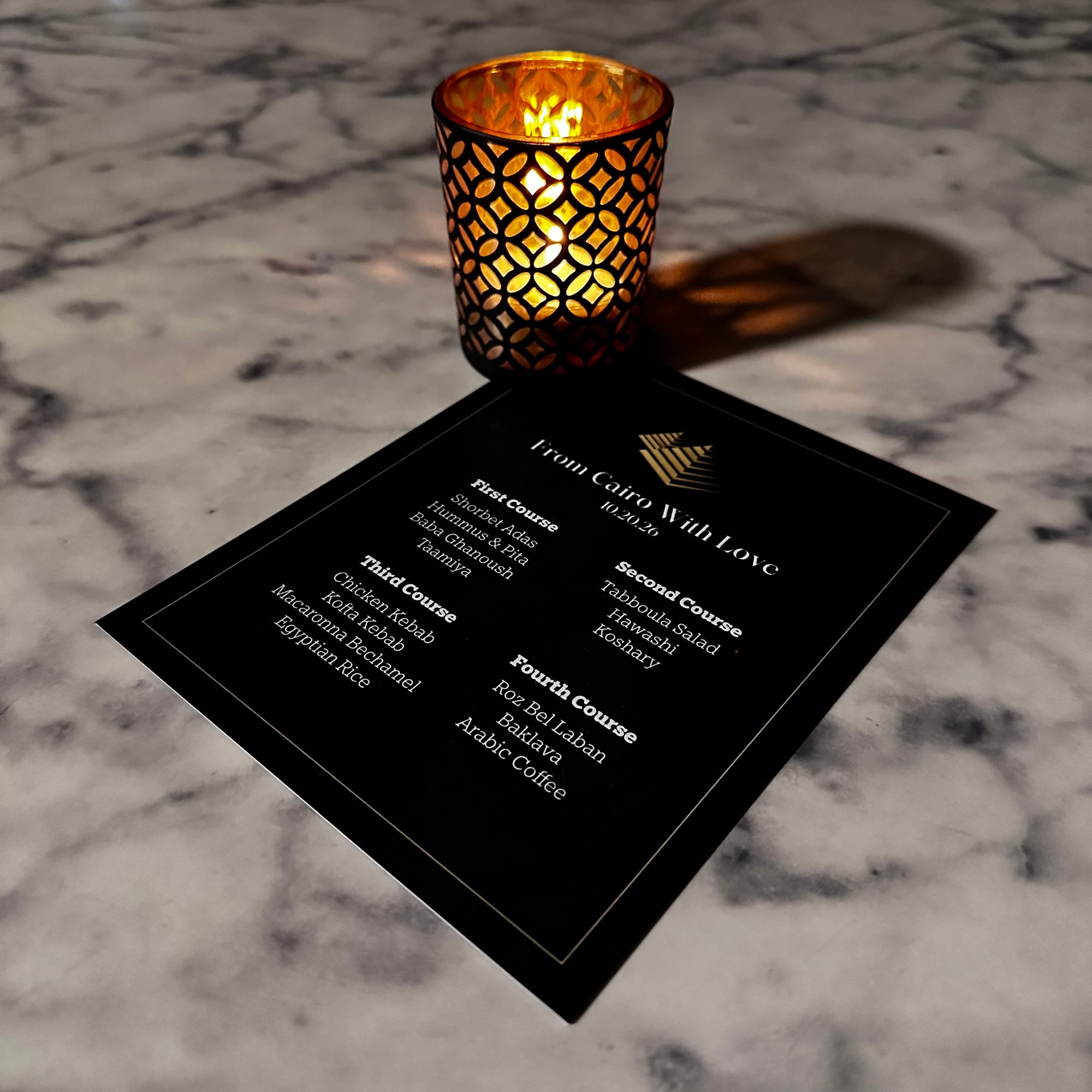
As mentioned on our About page, what started as an attempt to get a dozen or so friends together for a fun group dinner turned into a full restaurant takeover — on a random Tuesday night. We ended up planning a set, family-style menu ahead of time with the Cairo Kebab team, which streamlined their kitchen operations while giving attendees the luxury of tasting lots of different dishes without the hefty price tag of walking into a restaurant and ordering half the menu.
Together, we curated an assortment of 10+ dishes for guests to try that night. Some felt familiar to those with experience eating Middle Eastern cuisine — baba ghanoush, kofta kebab, taamiya (Egyptian fava bean falafel). Others, however, came as an unexpected surprise.
There was hawashi, a gorgeous concoction of spiced, minced beef wedged between toasted flatbread that could be described as an Egyptian quesadilla or burger. And macaronna bechamel, a creamy, beefy bake akin to Greek pastitsio that could be described as Egyptian lasagna. And, of course, the koshary, which could be described as nothing else at all. It's in a category of its own (and UNESCO agrees).
The Emergence of Something More
As we wound down the evening, sipping our cardamom-spiced Arabic coffees and sharing our mutual desire to visit the Pyramids, one question kept coming up: "When are we doing this again?"
100 Dinners was created as a result of that question. Join our mailing list to find out the answer.